

Denver Neighborhoods Ranked for Young Professionals (2026)
Beyond LoHi and RiNo: Denver's most underrated neighborhoods to live in now, ranked for young professionals who want more than the obvious relocation picks.
Denver's Most Underrated Neighborhoods to Live In (2026)
Updated May 2026
Denver has a neighborhood snobbery problem. The conversation defaults to LoHi, RiNo, and Washington Park, the same three answers in every relocation guide, every Reddit thread, every "where should I live" conversation at a bar. Those neighborhoods are good. They're also well-documented, well-priced-in, and well-crowded.
The parts of Denver that are actually interesting to live in right now are the ones that don't show up in that conversation, the Victorian neighborhood near City Park that locals walk through without knowing its name, the RiNo-adjacent block where you can still sign a lease under $1,400, the south Denver street of mid-century ranch homes that hasn't been discovered yet because it's south of a boundary most people won't cross. This guide is about those places.
Some of these neighborhoods are underrated because of geography (anything west of I-25 gets dismissed by people who've never been). Some are underrated because of history (neighborhoods that went through hard decades and haven't shaken the reputation yet, despite the reality having changed). And some are simply underrated because Denver people are creatures of habit and the information ecosystem rewards the same five neighborhoods on repeat. Here's what's worth knowing.
The Neighborhoods
1. Whittier
Northeast Denver, roughly E 22nd Ave to E 26th Ave, between City Park and York St · 1BR avg: $1,200, $1,650
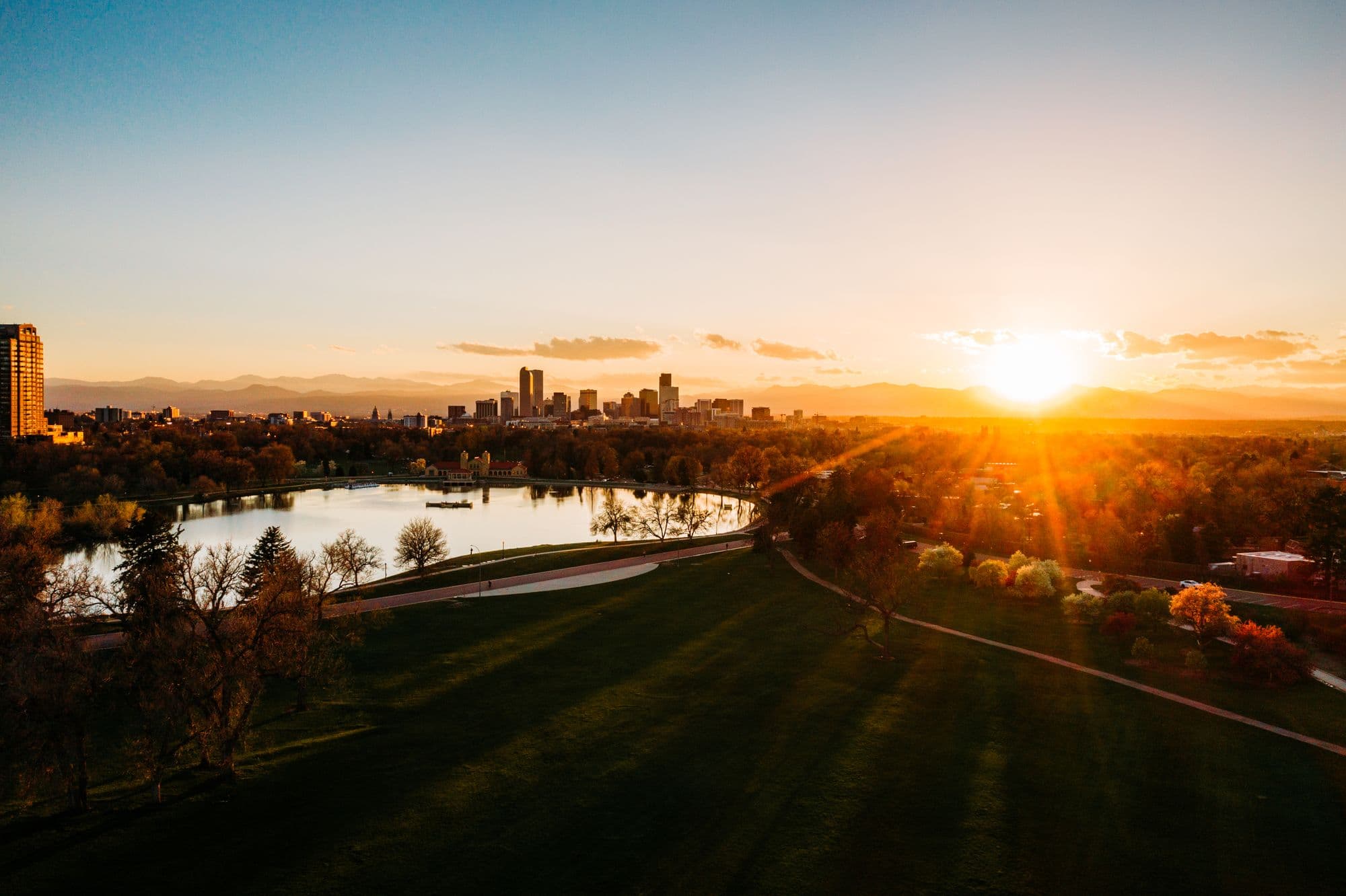
Whittier is one of the most physically beautiful neighborhoods in Denver that almost nobody outside Denver knows by name. It sits on the western edge of City Park, meaning your backyard, effectively, is 330 acres of park, a lake, the Denver Zoo, the Museum of Nature and Science, and from June through August, City Park Jazz on Sunday evenings, and the residential streets are lined with brick Victorians and craftsman bungalows that would cost twice as much to live near in Capitol Hill or Congress Park. The scale is human. You can walk to the park, walk to a coffee shop, walk to Colfax, and be on the 17th Avenue restaurant corridor in under ten minutes.
The reason Whittier gets overlooked is partly geography, it sits between Capitol Hill and Five Points, two neighborhoods with louder reputations, and partly because it doesn't have a commercial strip of its own the way Baker or Tennyson Street does. The neighborhood is residential-first, which reads as boring to people who haven't walked it. What it actually means is that you get one of the quietest, most livable blocks of housing in close-in Denver, at rents that are 20, 30% lower than comparable streets in Cap Hill, with the park and City Park Jazz as the built-in social infrastructure from June through August. For the price and the quality of daily life, nothing in Denver comes close.
Why it's underrated:No commercial strip, no visible nightlife, so it gets skipped in "where should I live" conversations. The people who live here know exactly what they have and don't advertise it.
2. Curtis Park
North Denver, roughly E 29th Ave to E 34th Ave, between Broadway and York · 1BR avg: $1,100, $1,600
Curtis Park is Denver's oldest residential neighborhood, the first subdivision platted in the city, dating to the 1860s, and it contains some of the most architecturally significant housing stock in Colorado. The streets between 30th and 34th are lined with Italianate and Queen Anne Victorians, brick cottages, and late 19th-century row houses that look nothing like the rest of Denver and have been maintained by a community of homeowners who are genuinely attached to the history. The park at the center of the neighborhood has been there since 1868. The swimming pool that opened in the park in 1890 was the first public pool west of the Mississippi.
The neighborhood sits just north of Five Points and just south of RiNo, which means it absorbs foot traffic from both without being consumed by either. Rents are among the lowest for a close-in neighborhood in Denver because the housing stock is old and some of it requires tolerance for older buildings, but the tradeoff is space, character, and a block-level sense of community that newer neighborhoods simply haven't had the time to develop. If you're moving to Denver and want to live somewhere with actual history rather than manufactured authenticity, Curtis Park is the most honest answer in the city.
Why it's underrated:Old housing stock scares off people who want new construction. But for anyone who values architecture and history over stainless appliances, this is the most distinctive residential neighborhood in Denver.
3. Cole
North Denver, roughly E 40th Ave to E 47th Ave, between Broadway and York · 1BR avg: $1,300, $1,800
Cole sits directly south of RiNo, separated from it primarily by perception and the train tracks rather than any meaningful distance or quality gap. The neighborhood is a working-class industrial-residential mix that's been absorbing RiNo's energy for several years: the coffee shops, the small creative studios, the independent bars that couldn't afford the rents one neighborhood over. The result is a neighborhood that feels like RiNo did about six or seven years ago, unfinished in the right ways, with more edge than polish, and priced accordingly. A decent 1-bedroom runs $1,300, $1,800, which is 20, 30% less than comparable space in RiNo proper.
Cole is not a finished neighborhood in the way that LoHi or Baker is. There are blocks that feel fully transitioned and blocks that feel like they're waiting. The commercial strip is scattered rather than concentrated, which means you'll make deliberate trips rather than wander. But the trajectory is the clearest of any neighborhood on this list, the development pressure from RiNo to the south and Whittier to the east is real, the light rail access makes it functional for commuters, and the people moving in right now are generally the ones who've been paying attention. A few years from now, this conversation about Cole will be the same one people had about RiNo a decade ago.
Why it's underrated:Geographic adjacency to RiNo without the RiNo price tag or brand recognition. The best near-term value play in close-in north Denver.
Free download
New to Denver? Skip the trial and error.
The New-to-Denver Starter Kit, free the second you join: where to live, how to find your people, and what to do first. Plus the Food & Drink Field Guide and the Weekend Playbook. One short email a week.
Free. 3-minute read. Unsubscribe in one click.
4. West Colfax
West Denver, roughly W Colfax Ave to W 17th Ave, between Sheridan and Federal · 1BR avg: $1,200, $1,700
West Colfax gets lumped in with the reputation of East Colfax, the grittier, more chaotic stretch of the corridor that Capitol Hill residents know, and loses completely on that comparison. The western end of Colfax, between Federal and Sheridan, is a genuinely different animal: quieter, more residential, and sitting directly adjacent to Sloan's Lake, which is Denver's second-largest park and arguably its best. The practical implication is that you can rent a 1-bedroom in West Colfax for $1,200, $1,700 and have a 290-acre lake park as your morning commute and the Odell Brewing rooftop overlooking the water three blocks away.
The neighborhood has been improving steadily as Sloan's Lake has gotten more attention, but it remains the cheaper side of that access, the lake doesn't have a hard boundary, and the quality of the park doesn't change depending on which side of Sheridan you slept on. The commercial strip on West Colfax itself is a mix of old-school Denver businesses, a few new independent spots, Seedstock Brewery among them, and some gaps that are clearly in transition. For someone who wants outdoor lifestyle proximity and doesn't need the neighborhood to do the social work for them, West Colfax is one of the better-value decisions in 2026 Denver.
Why it's underrated:The Colfax name carries baggage that doesn't apply to this end of the street. Most people looking at Sloan's Lake access pay the premium on the east side without realizing the west side delivers the same park for less.
5. Globeville
North Denver, roughly E 45th Ave to E 52nd Ave, between I-25 and Brighton Blvd · 1BR avg: $900, $1,400
Globeville is the most genuinely underrated neighborhood in Denver, and also the one that requires the most honest framing. It's sandwiched between Sunnyside to the west and RiNo to the south, has some of the cheapest rents in close-in Denver, and contains Globe Hall, the best small music venue in the city, built inside a Croatian and Slovenian fraternal lodge that has been operating on Logan Street since 1903. The Forney Museum of Transportation, which houses nearly 800 artifacts including Amelia Earhart's personal car, is also here. So is access to the South Platte River trail, which connects north and south Denver by bike in a way that few streets can match.
The honest part: Globeville has been an industrial and working-class neighborhood for over a century, and parts of it still reflect that. The I-70 and I-25 interchange cuts through its southern edge, and the neighborhood was literally bisected by highway construction in the 1960s, a scar that has never fully healed. It is not a neighborhood where you move for the block energy or the restaurant strip. But it is a neighborhood where you can sign a lease under $1,200, be ten minutes from RiNo and Sunnyside on a bike, walk to one of the best music venues in the city, and watch the development pressure arrive from every direction at once. The people who have already figured this out are not talking about it loudly.
Why it's underrated:Industrial history and highway proximity have kept the reputation behind the reality. The cheapest viable close-in neighborhood in Denver, with more going on than anyone who hasn't been there would guess.
6. Harvey Park
South Denver, roughly W Mississippi Ave to W Yale Ave, between Federal and Sheridan · 1BR avg: $1,000, $1,450
Harvey Park is south Denver's version of what people wish they had found before everyone else did, a neighborhood of mid-century ranch homes and brick bungalows built in the 1950s with solid bones, wide lots, mature trees, and rents that feel disconnected from their proximity to the rest of the city. The housing stock here is the kind that shows up on architecture blogs about mid-century residential design: low-roofline ranches with original tile, oak floors, and the kind of spatial logic that newer construction abandoned decades ago. You can still rent a two-bedroom house with a yard in Harvey Park for what a new-construction studio costs in RiNo.
Harvey Park gets overlooked because it's south, it doesn't have a commercial identity the way Baker or South Pearl does, and it doesn't have a hook that travels well in a ten-second description. What it has is quiet streets, a real park at its center, housing quality that punches above its price point, and a demographic that's been shifting younger as people who've done the math on Denver real estate start looking south of the boundary that most city-center residents won't cross. The Harvey Park Recreation Center and the park itself are genuinely well-maintained city assets, and the Bear Creek trail access to the west opens up outdoor mobility that most of Denver can't access without a car.
Why it's underrated:"South Denver" functions as a mental stop sign for people whose social life is anchored north of 6th Avenue. For anyone willing to cross it, Harvey Park offers the best housing-value-to-quality ratio in the city.
7. Barnum
West Denver, roughly W 10th Ave to W 13th Ave, between Federal and Sheridan · 1BR avg: $950, $1,350
Barnum is named after P.T. Barnum, who owned land here in the 1880s and helped develop it as one of Denver's early streetcar suburbs, a piece of history the neighborhood carries quietly while most people drive past it on Federal without knowing it exists. The housing stock is modest: small frame houses, older brick apartments, the occasional Victorian that survived. The streets are flat and walkable in the sense that Denver's grid makes everything technically walkable, and the neighborhood sits close enough to the Sun Valley redevelopment corridor and the Decatur-Federal light rail station that the infrastructure investment happening one neighborhood over is already exerting pressure on property values here.
Barnum is not glamorous. It doesn't have a bar scene, a restaurant strip, or a coffee shop with a line on Saturday morning. What it has is some of the lowest rents in close-in west Denver, a light rail connection that puts downtown in under fifteen minutes, Barnum Park as a quiet greenspace anchor, and the kind of block-level quietness that people pay a premium for in Wash Park and Highlands. The demographic is working-class Latino families who have been here for generations and younger renters who found the neighborhood through necessity and stayed through preference. Both groups tend to know their neighbors, which is rarer in Denver than it should be.
Why it's underrated:West Denver geographic stigma combined with no commercial identity keeps it off every list. One light rail stop from the Sun Valley development corridor and priced like nobody has noticed yet.
8. Westwood
West Denver, roughly W Virginia Ave to W Jewell Ave, between Federal and Sheridan · 1BR avg: $900, $1,250
Westwood is the most authentically Denver neighborhood that Denver people rarely visit, and the gap between what it is and how it's perceived is larger here than anywhere else on this list. The neighborhood is majority Latino, has been for decades, and contains some of the best Mexican and Vietnamese food in the state, not the upscale-restaurant version of those cuisines, but the real operational baseline of what those food traditions actually taste like when they're cooked for a community that grew up eating them. The stretch of Morrison Road through Westwood is a corridor of bakeries, taquerias, carnicerías, and family-owned restaurants, La Diabla Pozole y Mezcal is the one that's made it onto people's radar, but the corridor runs deep, that has been operating without press coverage or Instagram attention for years and is better for it.
Rents are the lowest on this list, which reflects both the reality of the housing stock and the fact that Westwood operates outside the information ecosystem that drives demand in Denver's more documented neighborhoods. The housing is modest and some of it requires tolerance for age. The commercial energy is entirely food-and-family-business oriented rather than bar-and-nightlife oriented. But for someone who wants to live in a neighborhood with genuine character, real community infrastructure, Westwood Unidos has been organizing the neighborhood for over a decade, and food worth driving across the city for, Westwood is one of the most overlooked answers in Denver. The people who've stumbled into it and stayed tend to become its most committed advocates.
Why it's underrated:Denver's food media has been slow to cover it and its residents don't need the attention. The best food corridor in west Denver, the lowest rents on this list, and more community infrastructure than neighborhoods at twice the price.
What These Neighborhoods Have in Common
Every neighborhood on this list is underrated for one of three reasons. The first is geography: anything west of I-25 or south of 6th Avenue gets functionally dismissed by a large segment of Denver's renter population, which has suppressed demand and prices in neighborhoods that don't have obvious quality gaps to justify the discount. The second is reputation lag, neighborhoods that went through difficult decades and haven't shaken the perception, despite the reality having improved. The third is simply the absence of a commercial hook: no Tennyson Street, no South Pearl, no RiNo Artisan Market to generate content and attention.
None of those factors say anything meaningful about what it's actually like to live somewhere. Whittier has City Park and beautiful streets and no one talks about it because it has no bar strip. Curtis Park has some of the most beautiful residential architecture in Colorado and no one talks about it because it's old. Globeville has the best small music venue in Denver and no one talks about it because the highway runs through the southern edge. The gap between the perception and the reality in these eight neighborhoods is the point, and the reason the rents haven't caught up yet.
Frequently Asked Questions
What is the most underrated neighborhood in Denver?
Whittier is the most underrated close-in neighborhood for quality of life, City Park access, beautiful Victorian streets, and rents 20, 30% below comparable neighborhoods, with almost no profile outside of people who live there. Globeville is the most underrated value play, cheapest close-in rents in Denver, Globe Hall in the neighborhood, and surrounded by development pressure from every direction. Harvey Park is the most underrated neighborhood in the city for people willing to look south.
What is the most affordable neighborhood in Denver that's actually good?
Westwood has the lowest rents on this list and genuine community character, the Morrison Road food corridor alone makes it worth knowing about. Curtis Park and Whittier are the best combinations of affordability and physical quality in close-in Denver. For anyone who's done time in Capitol Hill and wants more space for less, Harvey Park and Barnum are the honest answers.
Which Denver neighborhoods are up and coming in 2026?
Cole has the clearest near-term trajectory, RiNo adjacency, development pressure arriving, and rents that haven't caught up yet. West Colfax is the best bet for Sloan's Lake access before that value gets fully priced in. Globeville has the longest runway because the stigma is deepest, but the fundamentals, location, transit access, Globe Hall, are all already there.
Is west Denver worth living in?
Yes, and the geographic snobbery around it is one of Denver's more persistent blind spots. Sloan's Lake is in west Denver. The best Mexican food in the state is in west Denver. Some of the city's most affordable close-in rents are in west Denver. The light rail on the W Line connects Lakewood through the western neighborhoods to Union Station in under twenty minutes. The people who dismiss it are mostly people who've never spent real time there.
What Denver neighborhoods do locals actually recommend?
Ask someone who's been in Denver for five or more years where they'd move if they were starting over, and the answer is almost never LoHi or RiNo, it's Whittier, or Sunnyside, or Baker before it got expensive, or one of the neighborhoods on this list. The locals-versus-newcomers gap in Denver real estate knowledge is real, and it mostly runs along the axis of "places that have been written about" versus "places people have actually figured out."
Get the weekly Denver guide in your inbox every Wednesday →
What's happening this weekend, neighborhood guides, and what's worth knowing. Subscribe free.
See you out there, Denver.
Frequently Asked Questions
What is the cheapest underrated neighborhood to rent in near Denver's center?
Curtis Park has the lowest 1BR rents on this list at $1,100 to $1,600, thanks to its older housing stock that needs some tolerance for age. It's also Denver's oldest platted neighborhood, dating to the 1860s.
What neighborhood is closest to City Park in Denver?
Whittier sits on the western edge of City Park, giving residents walkable access to the park's 330 acres, the Denver Zoo, the Museum of Nature and Science, and summer City Park Jazz shows. 1BR rents there run $1,200 to $1,650.
Is Cole a good alternative to RiNo for cheaper rent in Denver?
Yes. Cole sits directly south of RiNo and is only separated by perception and train tracks, with 1BR rents of $1,300 to $1,800, which is 20 to 30 percent less than comparable RiNo space. The guide describes it as feeling like RiNo did six or seven years ago.
Why don't more people talk about Whittier as a Denver neighborhood to live in?
Whittier has no commercial strip of its own, unlike Baker or Tennyson Street, so it reads as boring in 'where should I live' conversations and gets skipped despite being residential-first with quiet, livable blocks near City Park.
Free download
New to Denver? Skip the trial and error.
The New-to-Denver Starter Kit, free the second you join: where to live, how to find your people, and what to do first. Plus the Food & Drink Field Guide and the Weekend Playbook. One short email a week.
Free. 3-minute read. Unsubscribe in one click.