

Denver Summer (2026): Ozone Alerts, Wildfire Smoke, and Whether You Should Actually Go Outside
For a real slice of Denver, summer is now the hard season, not winter.
The advice everyone repeats — get out early, hide from the afternoon — is right for heat and half-wrong for air. Ozone and wildfire smoke behave differently, and the right move for one is the wrong move for the other.
Why are ozone and wildfire smoke opposite problems?
Ground-level ozone isn't emitted, it's cooked. It forms when sunlight hits pollution from traffic, oil and gas operations, and lawn equipment, which is why it's a summer problem and why it builds through the day. CDPHE's guidance is to schedule outdoor activity "for mornings or late evenings, when ozone pollution levels are usually lower."
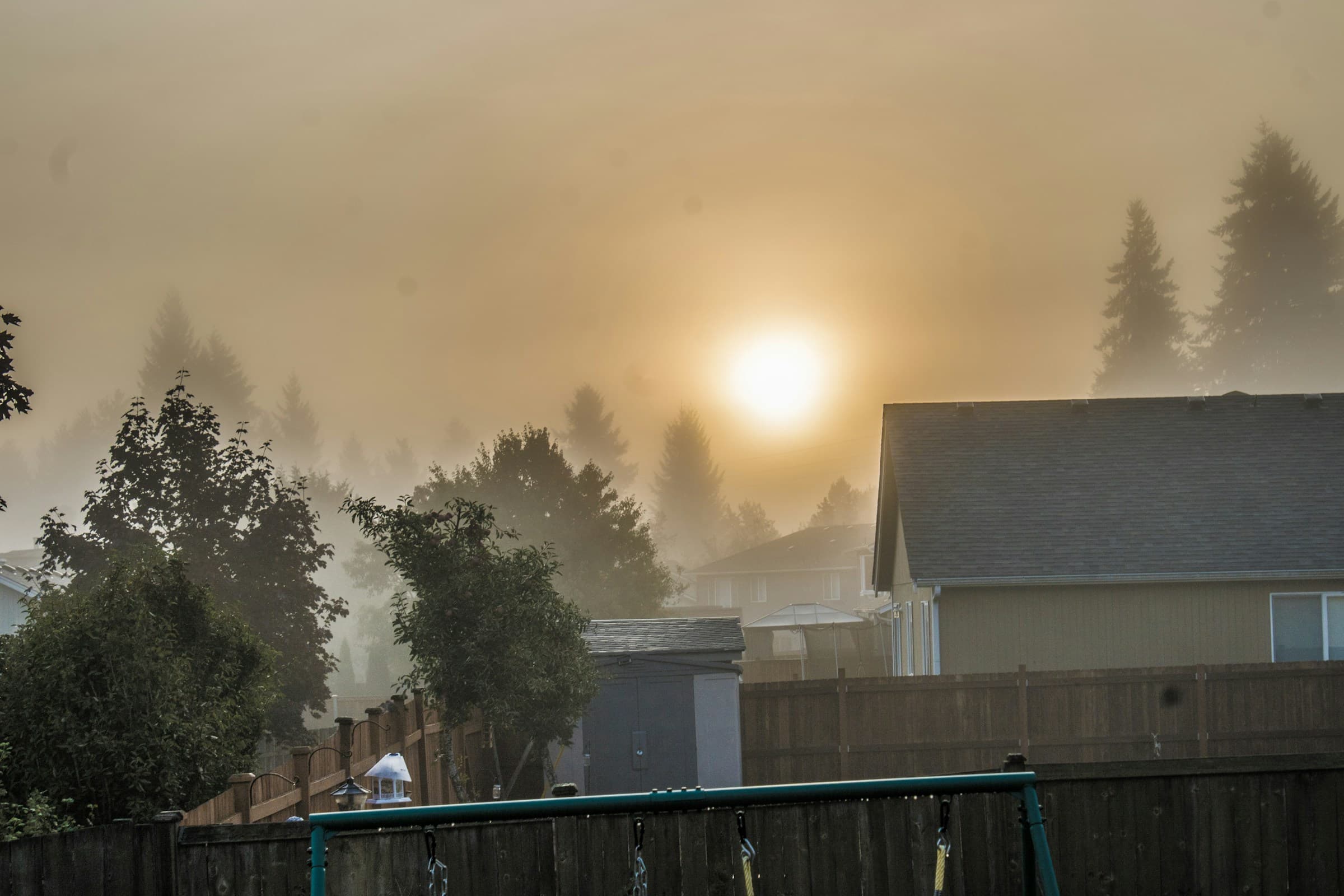
Wildfire smoke is fine particles carried in from somewhere else, so it follows the fire and the wind rather than the sun. CDPHE says the quiet part outright: "Smoke can be worse at night." The 9 p.m. run that's the smart call on an ozone day can be the wrong call on a smoke day.
EPA reclassified the Denver metro / north Front Range to "severe" nonattainment under the 2008 ozone standard in 2022, and to "serious" under the tighter 2015 standard in 2024, with the state since asking to be bumped to severe there too. Colorado logged 13 ozone action alert days by June 29 this year.
What does an AQI number actually mean for a workout?
0-50, Good. Train normally.
51-100, Moderate. Fine for most people. If you have asthma and you're doing intervals, you may notice it.
101-150, Unhealthy for Sensitive Groups. EPA's actual language: "active children and adults, and people with lung disease such as asthma, are advised to reduce prolonged or heavy exertion outdoors." Not just asthmatics — anyone doing a hard effort. This is the band people most often wave off.
151-200, Unhealthy. Anyone active outdoors may get respiratory effects. Move the hard session inside; keep the easy walk if you want it.
201 and up. Indoors.
EPA's practical fix is to change the effort, not only the hour — "go for a walk rather than a jog" — and to schedule when levels are lower, "usually in the morning or evening." CDPHE's list of sensitive groups is also broader than most people assume: people with asthma and other lung diseases, children, older adults, people who are pregnant, and adults active outdoors, including outdoor workers.
So should I run today, or do the patio?
On an ozone action day, front-load. Get out before mid-morning and skip the after-work run, which lands squarely in the worst window. An ozone action alert means forecasts show that day or the next may exceed federal standards; the Air Pollution Control Division issues daily ozone forecasts for the north Front Range, so this is checkable the night before.
On a smoke day, check a current reading instead of a forecast. Smoke moves fast, and state advisories have warned that air fine in your neighborhood now can change within hours. Do not assume evening is the safe option.
Patios run on different math. Ozone effects scale with how hard you're breathing, so a marginal ozone day is a much worse run than it is a beer. Smoke doesn't work that way — particles are particles, so a hazy day is a bad patio day even when it's a fine easy-walk day.
Does wearing a mask actually help?
For smoke, yes, and specifically an N95. CDPHE says to "use an N95 respirator outdoors," and is blunt that "other kinds of masks, such as cloth, surgical, or paint masks, do not prevent breathing in smoke." It only works with a seal, so clean-shaven where it touches. EPA notes respirators "are not sized for children," and says to ask your doctor before using one if you have heart or lung problems.
For ozone, treat it as unresolved rather than assuming the smoke answer transfers. N95s are particle filters, and ozone is a gas.
Where do you go when outside is off the table?
This is the real answer to a smoke week. Climbing gyms give you a hard session with no sky involved. Sauna and cold plunge studios scratch the same "did something difficult" itch a long run does.
At home, CDPHE recommends running your HVAC with the highest filter rating your system takes — "MERV 13 or higher is best" — plus a portable HEPA air cleaner or a DIY filter fan. Close the windows. It's miserable in July and it's still correct.
Is summer depression real, or am I just hot?
It's real and it has a name. NIMH describes summer-pattern seasonal affective disorder with symptoms that invert the winter version: trouble sleeping, poor appetite and weight loss, restlessness and agitation, anxiety, and in some cases aggressive behavior. It's less common than winter-pattern SAD, which is exactly why people who have it assume something is uniquely wrong with them.
The city's whole summer identity is being outside, so the weeks when heat and air quality push you indoors are also the weeks when every feed you open is somebody on a fourteener. Losing your outdoor routine to a smoke stretch isn't small when that routine was the mental health plan.
NIMH is clear there are no treatments specific to summer-pattern SAD; psychotherapy and antidepressants are what's used. See a doctor or a mental health provider if low mood, insomnia, or appetite loss runs past two weeks or starts interfering with work or relationships. If you're in crisis, call or text 988.
What about the Xcel bill and the hot second floor?
Xcel's Colorado residential time-of-use rates put on-peak at 5 p.m. to 9 p.m. on non-holiday weekdays, year round, with weekends and holidays off-peak. The summer season, June through September, carries the higher rates. So pre-cool before 5 p.m. and let the house coast, rather than running the AC hardest exactly when power costs most — which is also, unhelpfully, when upstairs is worst.
Practical Notes
- Ozone peaks afternoon and evening; smoke "can be worse at night." Check which one you have before picking a time.
- At AQI 101-150, reduce prolonged or heavy exertion outdoors — that band applies to healthy active adults, not just asthmatics.
- N95 for smoke, sealed and clean-shaven. Cloth and surgical masks do nothing for it.
- A MERV 13+ furnace filter plus one portable HEPA unit is the cheapest real air upgrade.
- Xcel on-peak is 5-9 p.m. weekdays, June-September rates highest. Pre-cool before 5 and coast.
See More
Free download
3 free Denver guides. Yes, really.
The Food & Drink Field Guide, the Weekend Playbook, and the New-to-Denver Starter Kit, yours the second you sign up. Plus one email a week, unsubscribe anytime.
Free. 3-minute read. Unsubscribe in one click.