

Stargazing Near Denver: The Best Dark Sky Spots and the Nights to Go (2026)
You can't see the Milky Way from Denver. Drive 90 minutes and you're in a certified dark sky park. Here's where to go and which nights are worth it.
You can't see much of the Milky Way from Denver. City light washes it out. Drive an hour and a half, though, and you're standing in a certified dark sky park. Here's where to go, from a telescope night in town to a full overnight in one of the darkest valleys in the state, plus the nights worth planning around this winter. For after-dark ideas closer to home, see things to do in Denver at night.
The quick picks
- Closest real dark sky: Jackson Lake State Park, about 90 minutes northeast.
- Best without leaving town: a public night at Chamberlin Observatory.
- Best free telescope night: Sommers-Bausch Observatory at CU Boulder.
- Best overnight trip: Westcliffe and Silver Cliff.
- Bucket list: Great Sand Dunes National Park.
In town
Chamberlin Observatory, Observatory Park
The Denver Astronomical Society runs public nights at the historic observatory near DU, and you get to look through real telescopes with volunteers who know the sky. Tickets are required and they go fast: 70% of each month's tickets go on sale two months ahead, and the other 30% open on the first day of the month. Set a reminder.
Sommers-Bausch Observatory, CU Boulder
Free Friday open houses during the school year, starting at 8 p.m. (9 p.m. in summer), on pier-mounted 20-inch telescopes. Nights get canceled for weather, so call the observing status line at 303-492-2020 about 30 minutes before you leave. It's at 2475 Kittredge Loop Drive on the CU campus.
Day trip: Jackson Lake State Park
The closest International Dark Sky Park to Denver, certified in 2020, and when it was certified it was the only one in Colorado east of I-25. Take I-76 east to exit 66B, then head north on CO 39/52 for about nine miles. A day pass runs about $10 to $12.
The move is to camp. The park has 251 campsites, it's open year-round, and you can reserve up to six months ahead. The park asks campers to keep their lights low so the sky stays dark for everyone.
A little farther: Florissant Fossil Beds
Florissant Fossil Beds National Monument, on the far side of Pikes Peak about two hours from Denver, is also a certified International Dark Sky Park. It pairs well with a day around Woodland Park or Cripple Creek. For more ideas, see easy mountain day trips from Denver.
Overnight: Westcliffe and Silver Cliff
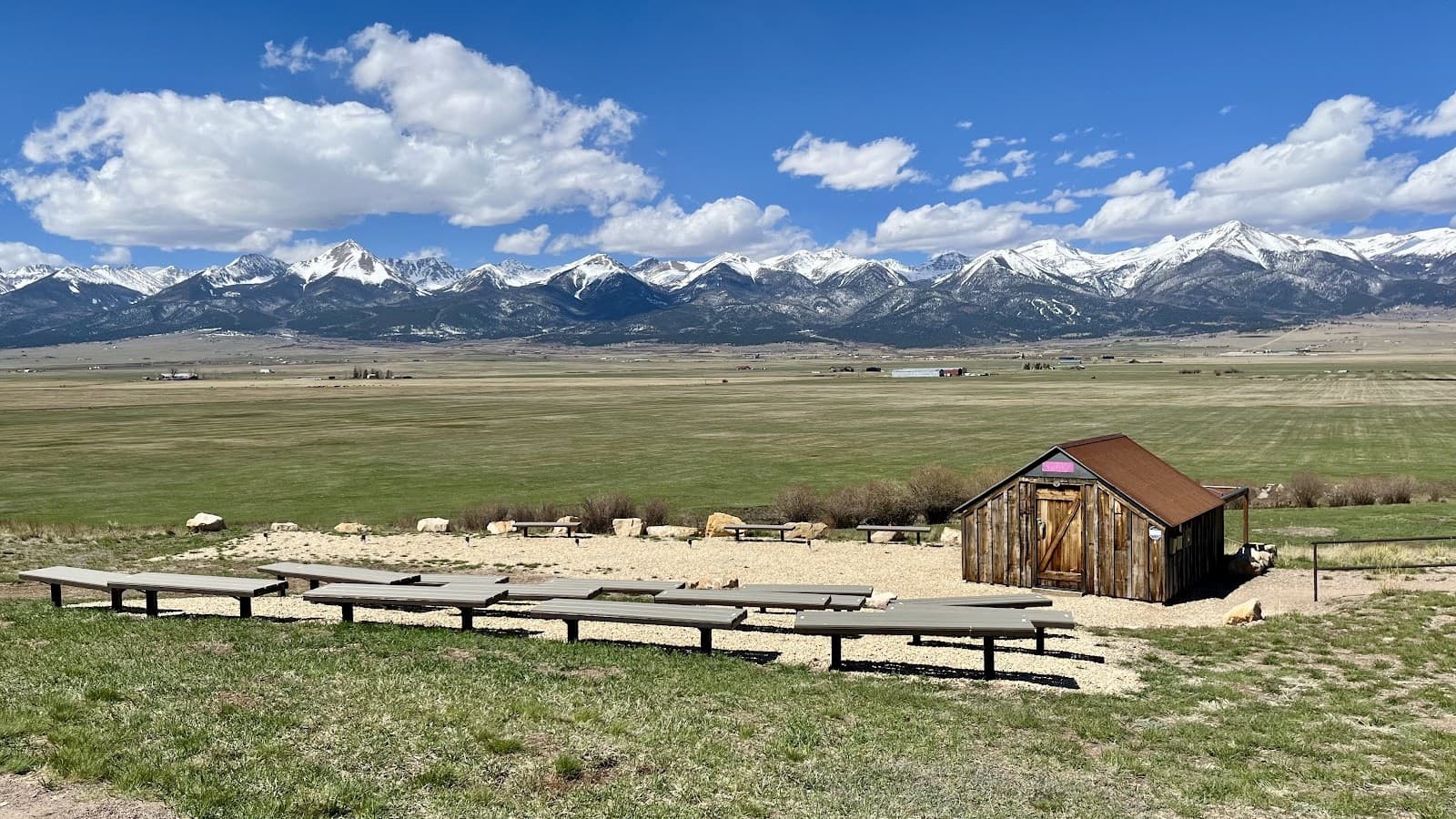
In 2015, these two towns in the Wet Mountain Valley became Colorado's first International Dark Sky Community, and they're among the highest-elevation dark sky communities in the world. The Sangre de Cristo range sits right behind them.
The Smokey Jack Observatory in Westcliffe's Bluff Park has a roll-off roof and a 14-inch telescope, and volunteer Star Guides run free star parties through the year. It's about three hours from Denver, so book a room and make a night of it.
Bucket list: Great Sand Dunes
Great Sand Dunes National Park is a certified dark sky park too, and lying on the dunes under a moonless sky is one of the best nights you can have in Colorado. It's about three and a half to four hours away, so plan a weekend: dunes by day, stars by night. Make it a full trip with a stop from our hot springs guide.
Want something in between? Browns Canyon National Monument near Salida picked up its own Dark Sky Park certification and splits the difference on drive time.
When to go this winter
The moon matters more than anything else. Plan around the new moon, give or take a few days:
- November 9
- December 8
- January 7, 2027
Two meteor showers are worth a drive:
- Leonids, peaking around November 17. The moon is about half full and sets around midnight, so go late.
- Geminids, peaking the night of December 13 to 14. The best shower of the year, and 2026 is a good one, since the moon is only a crescent and sets by mid-evening, leaving the peak hours dark.
How to actually see something
- Give your eyes 20 to 30 minutes. Full night vision takes that long, and one look at your phone resets it.
- Use red light only. A red headlamp, or your phone's red-light mode, keeps your eyes adjusted.
- Check the cloud forecast, not just the weather. A clear afternoon can turn into a cloudy night.
- Dress for way colder than Denver. Mountain valleys drop fast after dark in winter. Bring layers, a sleeping bag or blanket to lie on, and something hot to drink. New to Colorado cold? Read your first Denver winter.
- Bring binoculars. Even a basic pair shows the moons of Jupiter and star clusters you can't see with your eyes alone.
Planning a bigger trip? See our weekend trips from Denver.
Frequently Asked Questions
Where is the closest dark sky park to Denver?
Jackson Lake State Park, about 90 minutes northeast, certified as an International Dark Sky Park in 2020.
Can you stargaze in Denver?
City light washes out most of the sky, but Chamberlin Observatory runs ticketed public nights, and CU's Sommers-Bausch Observatory in Boulder hosts free Friday open houses during the school year.
When is the best time to stargaze near Denver this winter?
Around the new moons on November 9 and December 8, 2026, and January 7, 2027. The Geminid meteor shower peaks the night of December 13 to 14.
What was Colorado's first Dark Sky Community?
Westcliffe and Silver Cliff in the Wet Mountain Valley, certified in 2015.
Free download
3 free Denver guides. Yes, really.
The Food & Drink Field Guide, the Weekend Playbook, and the New-to-Denver Starter Kit, yours the second you sign up. Plus one email a week, unsubscribe anytime.
Free. 3-minute read. Unsubscribe in one click.